Event description
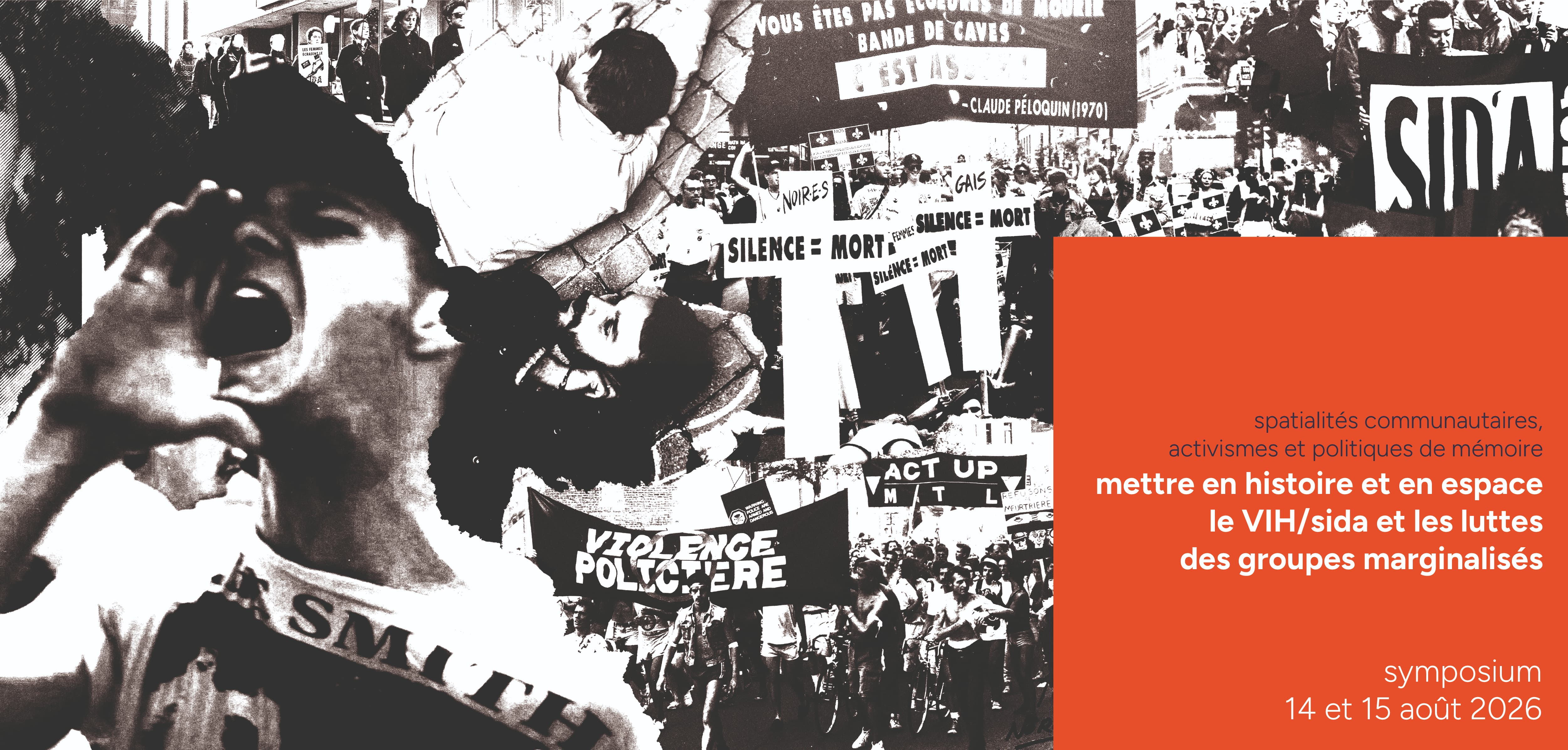
The HIV/AIDS epidemic has been a structuring event over the past decades, at the intersection of public health policies and media visibility. It has also constituted a major theoretical laboratory for queer studies. Yet today, the epidemic maintains an ambivalent relationship with memory: simultaneously present and threatened with erasure; institutionalized but politically neutralized.
This symposium invites reflection on the spatial dimensions of the epidemic and its memories. Biopolitics is embedded in concrete spatialities: hospitals, hospices, communal housing, bars, saunas, parks, streets and private apartments. Space becomes an active agent of subjectification and resistance. Queer geographies have shown how sexual minorities have resignified urban fragments, transforming them into territories of sociability, desire and solidarity. The epidemic has reconfigured these spatialiaties: some places have become spaces for care or mobilization, others sites of mourning, and still others have disappeared under the combined effect of mass mortality and gentrification.
In Montréal as elsewhere, urban changes and the institutionalization of places of memory raise questions about the tension between community memory and heritage preservation. Queer archives constitute a political practice in the face of erasure. The Archives gaies du Québec participate in this production of a counter-history. However, the increased visibility given to the struggles of LGBTQ2S+ communities sometimes makes invisible the experience of other marginalized groups.
This symposium aims to examine the material, epistemological and curatorial conditions of this transmission, in dialogue with the struggles of other marginalized groups. Discussing the memories of HIV/AIDS involves navigating tensions between sensationalism and discretion, between personal narrative and structural analysis, between institutionalization and radicalism. How can we make visible the intersectional dimensions — racial, gendered, migratory, class-based — often marginalized in dominant narratives? Revisiting the spatialities of HIV/AIDS allows us to open up a broader reflection on the political management of crises, vulnerability and spatial justice.
To view the detailed program[46 KB - 2 pages]
Organized in parallel with the exhibition Active Grieving: The Aesthetic Activism of ACT UP Montréal, this bilingual symposium will be held at the MEM – Centre des mémoires montréalaises, with the support of the Social Sciences and Humanities Research Council of Canada and the Laboratoire d’étude de l’architecture potentielle.