Event description
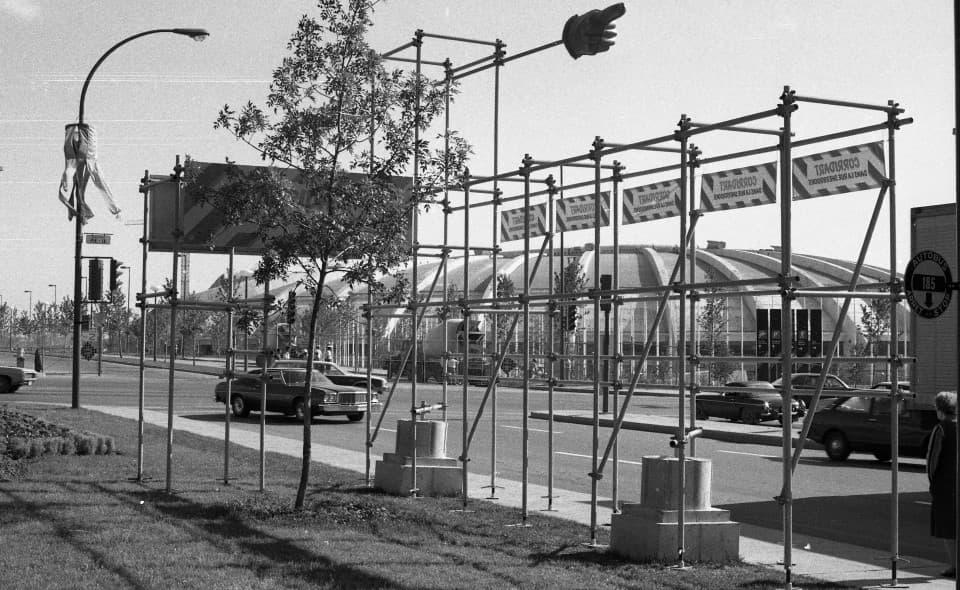
On the night of July 13, 1976, a few days before the opening of the Olympic Games in Montréal, City workers arrived on Sherbrooke Street and completely and brutally dismantled an exhibition. Mayor Jean Drapeau made the decision without consulting anyone. It was censorship in action.
Fifty years later, the MEM is turning the spotlight on this little-known event around the Montréal Games. What was Corridart dans la rue Sherbrooke? Or rather, what should Corridart have been?
Imagined as a huge artistic and heritage exhibition in the heart of the city, the project was the centrepiece of the arts and culture program of the Olympics organizing committee (COJO). From July 7 to 31, 1976, a total of 22 artworks, along with panels portraying the historical development of Montréal, were to turn Sherbrooke Street into an open-air gallery, from Atwater Avenue to the Olympic Stadium.
Designed by Montréal architect Melvin Charney, the exhibition rapidly became the centre of a controversy, resulting in extensive media coverage and a public debate around artistic freedom and censorship.
Corridart: The Exhibition That Vanished Overnight aims to reconstitute the major artistic elements of Corridart and shine a light on the censorship to which it fell prey.